
Don't be distracted.
Or do. Don't let me tell you what to do!

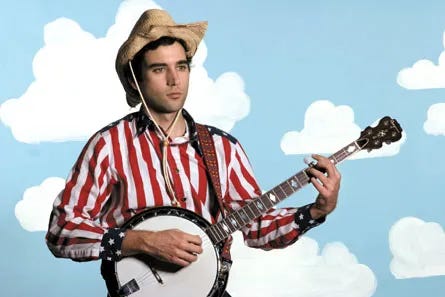
In 2010, I saw Sufjan Stevens perform Age of Adz in Seattle’s Paramount Theater. The stunning Beaux-Arts ceiling glimmered as a halo for the cosmic sound of Sufjan belting:
“I must do myself a favor and get real/get right with the Lord.”
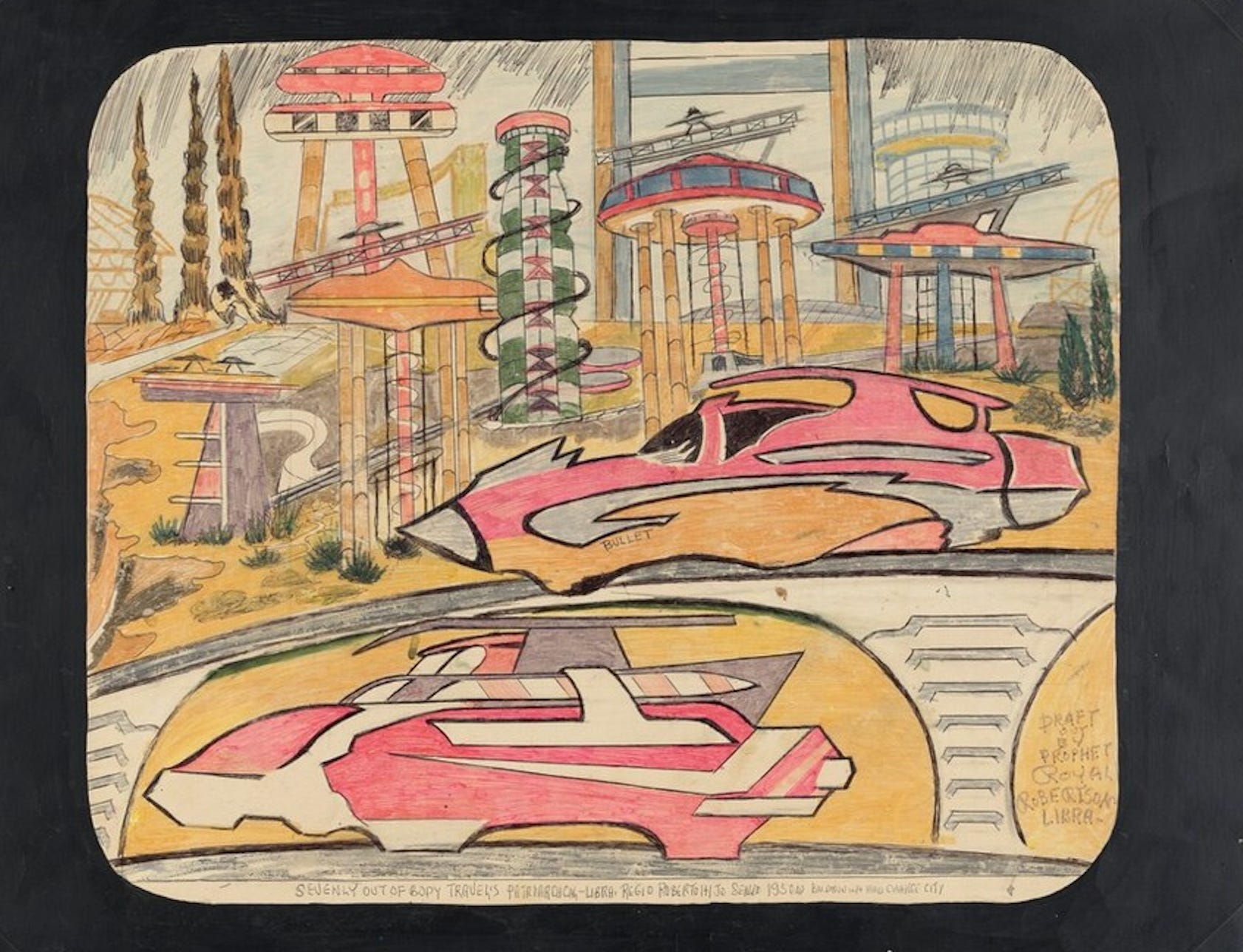
The album was inspired by the schizophrenic outsider artist Royal Robertson, a Louisiana-born painter whose work ranged from accusatory rants against his “whore ex-wife” Adell, to psychedelic paintings of the cosmos and rolling Apocalypse.
Sufjan’s inspiration was multi-layered: the album cover featured Robertson’s visual work, and the electronic discordance was inspired by the painter’s phrenetic relationship with the world. But most of all, the album played with Robertson’s personal thesis of The Artist as underdog hero, as the last standing figure against the Ultimate Evil of apocalypse.
Sufjan swayed under glow sticks as he sang a chorus of paranoia, overstimulation, and spiritual isolation.
I cried four times during his set. This made me stoic and dry-eyed compared to audience members in full ecstatic weeping. Down the row from me, a woman’s head shook like wet noodles as a cartoonishly tall man rubbed her back.
All while Sufjan sang:
“I’m not fucking around (well, I want to be well, I want to be well)” over the sounds of a swelling choir.
Describing a live concert in the written word feels like dancing about a painting, or eating about a sleep cycle. It’s painfully clumsy and potentially alienating. I know this.
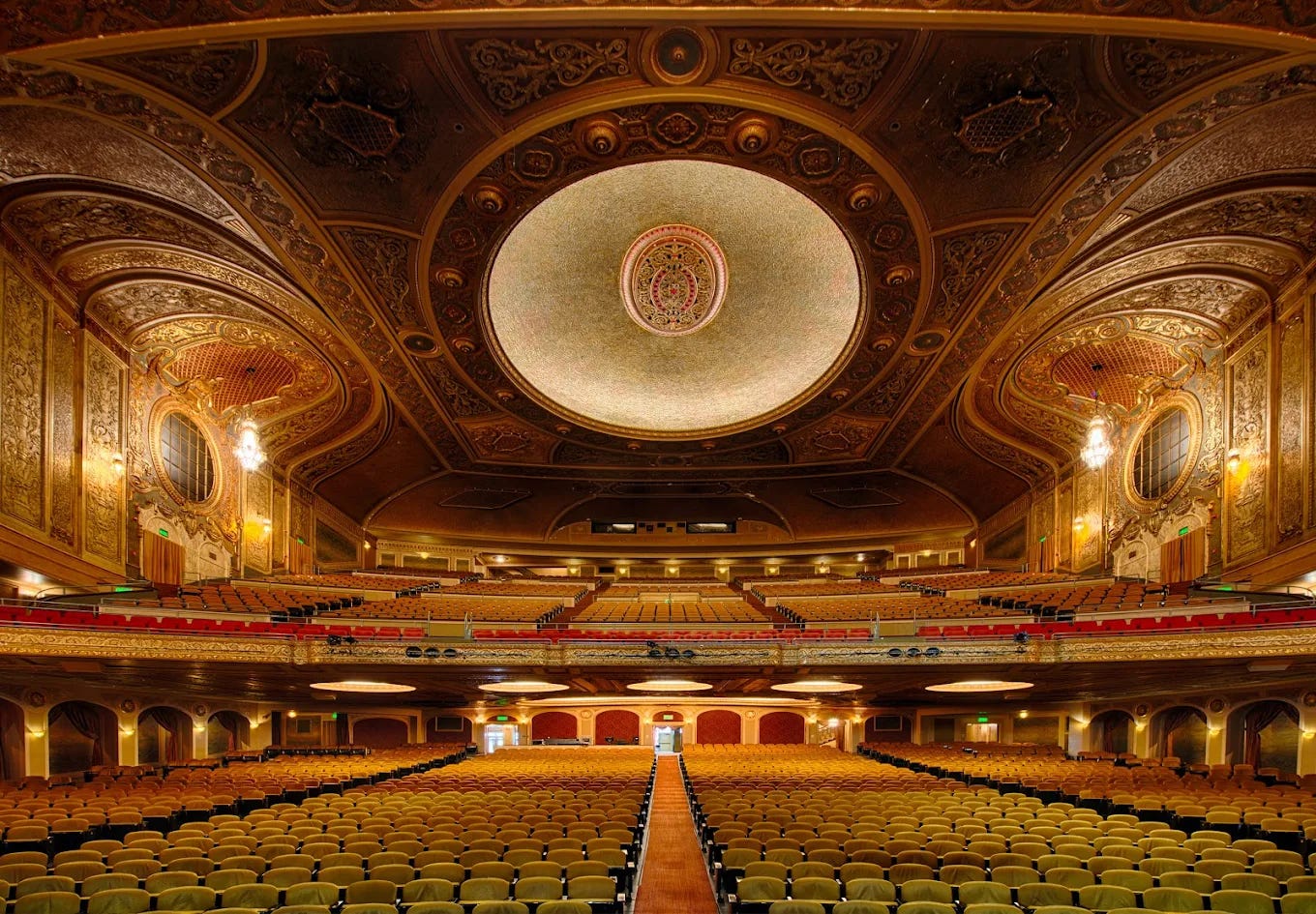
But now, over fifteen years later, in this steroid-fueled age of ads, my brain replays a cognitive looping of that night. My mind’s eye shows me a full room of people singing “don’t be distracted” under the high ceilings of The Paramount.
In that moment, it was a promise to each other, to stay here: with our feet on the ground in the physical world, no matter how many gravities pulled us toward the digital blackhole of fear.
I cried, in that big room, equally from emotional priming and recognition, there was resonance in the electronic ascendance. I felt a cultural shift in my body, the rapid future rushing toward me, the age of ads bidding on the real estate of my brain. I felt my attention being stretched into new shapes, sharing custody between my brick-and-mortar job on Third and Pine, and my obsessive Facebook addiction where I inhaled poems about Adderall between Macbook ads.
The chant of don’t be distracted felt personal, yes, but it also felt culturally prescient on a massive scale. Instagram had officially launched mere weeks before the concert, just three years after Facebook’s 2007 launch of targeted advertising. Three years later, in 2013, Vine would drop, rapidly deploying our obsession with short-form video content, the cool older cousin of TikTok.
Even people not addicted or plugged into early social media could feel the swirling of outer space, the hyper-speed of information accelerating, a new level of war on our minds. Attention was no longer a matter of what you actively chose. It was a matter of what you could ignore, bypass, or sort into an Other inbox.
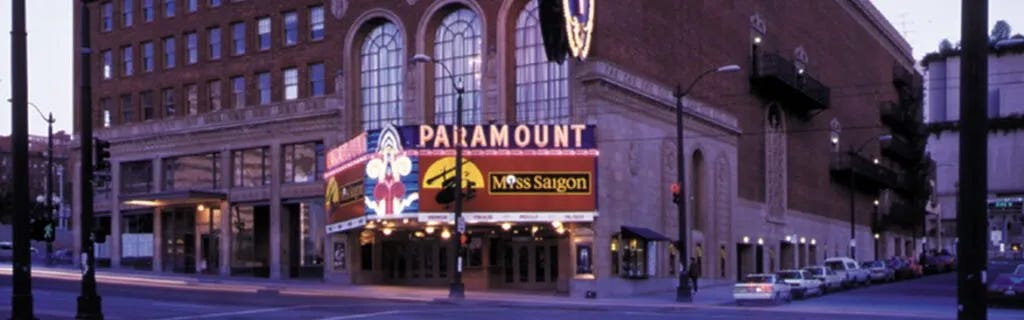
The grand chandeliers of The Paramount felt apropros, a surviving slice of history soaking the songs of a fearful future. The venue itself was, and is, a decades-long broker for shifting attention. It was originally built in 1927 as a theater for silent films and vaudeville, the Brave New Medium one hundred years earlier, scored by a Wurlitzer pipe organ.
Soon after construction, the Great Depression would starve industries and households, and vaudeville as an art form would nosedive. But out of vaudeville’s ashes would rise musical theater, and a booming film industry. The Paramount would evolve with demands, showing new art forms while prioritizing live performance. Just a year after the Sufjan concert, they’d host televised auditions for season six of America’s Got Talent. The venue’s history of survival and change, including brief closures that rattled the city, felt hopeful and instructive.
The future is scary. But it does arrive, and somehow, amidst the wreckage artists are still co-creating it.
These days, I find myself evangelizing for live shows more than ever. It can be a selfish soapbox, because I host and produce comedy and variety shows. But I also practice what I preach: prioritizing nights out to see bands, dancers, or comedians where I can. Watching a human being work out an idea in real time, in the humility of the flesh, is stressful and awkward and invigorating. More and more, it’s being marginalized into a novelty. Our brains, under the levy of distraction and global fascism, are being coaxed into the digital blackhole of helpless fear. Simultaneous isolation and overstimulation is a legitimate form of psychological warfare waged by tech companies and their oligarch daddies.
The Merriam-Webster dictionary definition of psychological warfare lays it out: “things that are done to make someone (such as an enemy or opponent) become less confident or to feel hopeless, afraid, etc.”
I was a regular listener of How To Save a Planet when it aired, transfixed by the futuristic science of an adaptable future, as well as the honest narrative of current disaster. One of the running threads was emergency preparedness, and what’s possible as an individual. First, they’d tell listeners, you need a go-bag, 72-hours (at least) of food, solar charging ports, and water filters. Secondly, there were scalable actions you could take based on your living situation: homeowners could sustainably retrofit property, people with gardens could grow food, and so on.
However, the number one advice was always to meet your neighbors, attend your local institutions, and fumble into the IRL world as much as possible. Annoying as ever, surviving is always collective.
In an age of growing censorship enforced by governments, and the repression of unregulated social media platforms, (I recognize the irony of writing this here), a room of people exchanging ideas is increasingly sacred, because of its sheer potency for artistic incubation, and people power. I see that in Minnesota, where rightfully enraged neighbors took the streets in a massive general strike in response to ICE’s reign of terror. I see it Iran where protesters continue to rage amidst power outages and repression. In Greenland, where Indigenous rights activists rallied thousands into the streets to stand up against Trump’s violent land-grabbing.
The Paramount chandelier cradling the chorus of fears still exists, just like the future itself.
So I remind myself to keep my feet on the ground, over and over, humming,
don’t be distracted.
And I look around the room, to make sure people are still here singing with me, because I’m off-tune as hell, I sound like a drunk girl at karaoke.
Speak of the live show devil, I’m performing my solo show live in Amsterdam this Friday, January 30th, doors 745, at Droog. You can grab a ticket here.
wow we were both at that show. one of the few concerts i can say really moved me.