
Dead phone time machine.
The cosmology of a phone number.

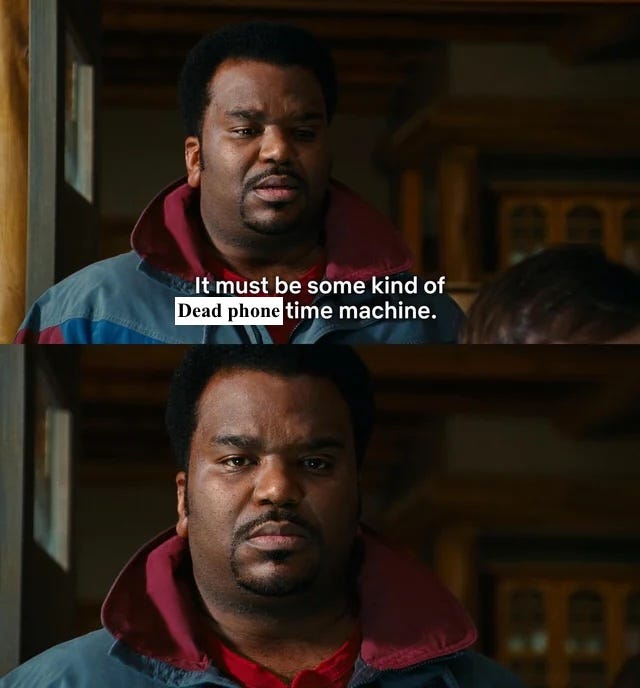
Last week I gave up my phone number of 13 years. My old phone warped in the Amsterdam heatwave on my windowsill, and I cried on the couch for an hour. Sometimes, simple bureaucratic tasks like switching phones unlock valves of memory. You start with a tick on your to-do list. But now? You’re unglamorously throttled into a time machine, but there’s no hot tub with John Cusack, just humbling memories you didn’t ask for. You thought you’d breeze through this task, but instead you’re humiliated by how raw you are to the constancy of change, all while a man from Verizon waits for you to complete a survey.
I secured the phone number during my last year in Chicago. I was sleeping in my friend’s walk-in closet after my apartment was robbed multiple times. The man who broke into the apartment was around the block, later identified by a neighbor as “always getting into it.” He smartly cased the place. My building had a back fire escape kissing a stairwell that was under construction. There were four apartments in the building, and we all had friends stepping over caution tape to smoke, even the parents of small children regularly hosted guests who climbed through metal hazard to break bread. I lived with two other young women at the time, and we weren’t sober most nights while locking up. Jamming open our lock was a surefire way to grab a Chromebook to pawn, maybe a few cracked phones, and far too many PBRs. After the second time, we realized how lucky we were he didn’t hurt us, but it was time to leave.
In an attempt to start fresh, my phone - a casualty of the second break-in, was traded in for a stock replacement and a new number. It was time to replace my Seattle number and embrace my years in Chicago. I’d already ridden the bus in -10 degrees to my coffeeshop job during a Polar Vortex, my skin so cold-numb my cheeks bled without me realizing. I’d been fired from a high-end Italian coffeeshop job because a manager accused me of stealing (he was the actual thief and apologized later). I’d been fired from my bar-backing job at Second City because I missed a shift, (my stoner coworker said he’d cover but forgot because Acid Rap dropped that week and he was convinced he could communicate with Chance the Rapper inside his own mind). I’d been kicked out of college due to rising tuition and a canceled grant. I broke up with a boyfriend after we watched “Riding in Cars with Boys” and he joked about pricking a condom so I’d change my mind about kids.
So hell, if this wasn’t truly living in a place what was?!
It was overdue. I got a Chicago number, and I moved into my friend’s walk-in closet. There was enough space for my backpack and the stained school tote bag I bitterly kept from school. My friend was also struggling and generous, so we shared day-old pastries from my job and recapped our horribly aloof sex lives. We were still so young but had no idea what that meant. After all, we were the oldest we’d ever been, we certainly felt the heaviness of that.
When I first arrived in Chicago, I was fresh off my days working on Third and Pine, and I wanted to sprint straight into the skyline and inject it into my veins. I wanted to topple every roof with my lust for life, deeply aware of how quick the sand is, unwilling to trust the bounties of friendship I received because I felt floor falling beneath me. Getting robbed, fired, or kicked out of school felt safer than golden hour snacks on my friend’s carpet, because these ejections confirmed my suspicion that there was always cosmic tax to pay. The shoe would drop, and it was important to stack as many shoes as possible, to store up goodwill for later, to pay penance for whatever evil you’d ignorantly dispensed into the world.
Chicago did not have time for self-flagellation or superstition, it was a place to clock in, clock out, and climb the fire escape to oblivion. Being a generally curious person without borders, I found all sides of oblivion, and quick. Shot, chaser, pickleback, night bus.
When I left Chicago to stay with my sister in Flatbush, to work at the Farmer’s Market and experience New York’s thorny glory, I kept the number as a keepsake. It threw off the scent of telemarketers who posed as Chicago numbers, it thrust me into arguments about pizza where I pissed people off (bisexually) by claiming New York Pizza and Chicago Deep Dish are two different dishes that can be enjoyed without competition. It was a tether to Chicago, as I expanded my roots and narratives further east, a literal way of keeping a piece of it on me, at all times.
As a lifelong floater, emotionally, socially, and geographically, I pack my physical and non-physical anchors like inextricable tethers. A phone lives in the physical world, it holds batteries, sim cards, and nasty charging ports to anchor us. In contrast, a phone number is a metaphysical anchor, begging the nature of reality itself, the nature of being reaching, of being attached to a systematic assignment of numbers. It suggests the absurdity of what we take for granted - that your loved ones have a code that travels through satellites so you can hear each other’s voices (or more realistically, exchange memes on Whatsapp).
Philosophers, the big bangers with long Wikipedia pages, could never agree on the state or meaning of numbers, the physical or metaphysical nature of them, or their proved existence at all. The question of whether numbers exist, or are just adjacent to that which exists, still lingers for many.
Pythagoras believed numbers helped build reality, holding divine value and shaping the world as we know it. They weren’t just useful as a tool to humans and our whims, they were the cosmology of the world as a math problem, and many numbers had spiritual meanings within themselves.
My phone number, to Pythagoras, perhaps would be considered a cosmic time machine that holds conversations from the last 13 years. He might consider my phone number an actual cloud, undirtied by tech assholes or data miners. In the math problem of the world, those ten digits thread my homes in Chicago, New York and Amsterdam together. They were not simply a tool, but a spiritual equation, a digital pathway, a holding place for all the new and old relationships that evolved through. To mourn a phone number is to grieve an interpersonal cosmology.
Structuralists, on the other hand, posited numbers are abstract realities, that require the grounding of objects, and their use alongside objects. So, two only exists when you have two oranges on the table, or two friends who want to eat those oranges. It is only then, that the essence of twoness is activated. Otherwise, it is mere abstraction. To a structuralist, perhaps, my phone number would be an idea, yes a series of ten digits, but not holding anything, just doing the dialing. It’s a calling card, but not a place in itself to call, and so with it gone, not much is lost. There are more calling cards.
Nominalists, stripped bare all abstractions of numbers - neither spiritual or mathematic, and only recognize numbers in the two on the table. There is no need for abstract musing, two cannot exist without oranges. My phone number cannot exist without me, my phone, and another person who wants to contact me, it’s the least important thread in the equation even though it connects us all. There is no loss of a phone number, because its function (and therefore reality) doesn’t exist without me, my loved ones, and my physical phone, so what is the problem, then? If I exist with a phone, the function of a phone number will be achieved. No loss was ever experienced.
Now, I want you to imagine being the unfortunate man on the other end of the phone with me, the Verizon employee receiving an international call to cancel a phone line, heavy with the weight of these memories and philosophical musings. Give me a fucking break, right?
Luckily, for him, I didn’t share any of this on the phone, I communicated with what a Slovenian friend calls my American Dissonance voice, which is best friends with my American Laugh (loud, cackling, existentially nervous - as if a tax collector will beat me to death at any moment).
I called the Verizon number to cancel my account, and the man on the other end had a soft drawl, an Arkansas accent if I could pin it down. He pronounced “pin” and pen the same, and reminded me of a kind coworker at a tile factory (in Chicago) who moved from Arkansas. The coworker was the only person I’d knowingly met from there, so I remembered his voice. This specific familiarity, the warm drawl of the Verizon man’s accent made me want to cry, it was American in a way I love, and miss. He asked what happened to my phone, and seemed genuinely sad that it broke. He asked if he could give me a discount or help me keep my account, “you’ve been with us over 12 years, even if you don’t live here you can keep an account.”
I’m not a total useless sap, I knew the call was “recorded for quality assurance” and he likely just sounded genuine because his American Dissonance voice is a more charming Southern strain than mine. But his insistence and warmth was testing my time machine jet lag! Didn’t he know I was mourning a Pythagoras number-cloud and the years of conversations funneled through various phones and locations? Wasn’t this hard enough, Verizon Man?! STOP BEING NICE TO ME I WILL WARP LIKE MY PHONE BATTERY.
All to say, I did complete the survey for him, it’s the least I could do.
Great one!
It’s crazy how something as seemingly benign as changing a number can open the floodgates and the memories come rushing in, sometimes memories I’d forgotten that I’d remembered, and it’s just like for a few moments, there they are.
Side note! I didn’t know you lived out here at one point (Seattle), I’ll have to read that Third and Pine piece when I get a minute. Such a wild intersection. That and the Dog Park in Belltown.
Also eternal love for Craig Robinson